The Diwali lights are back in their box. Your new mixer is on the kitchen counter, and the credit card statement has just arrived. Then Amazon India asks you to start a wish list for another sale.
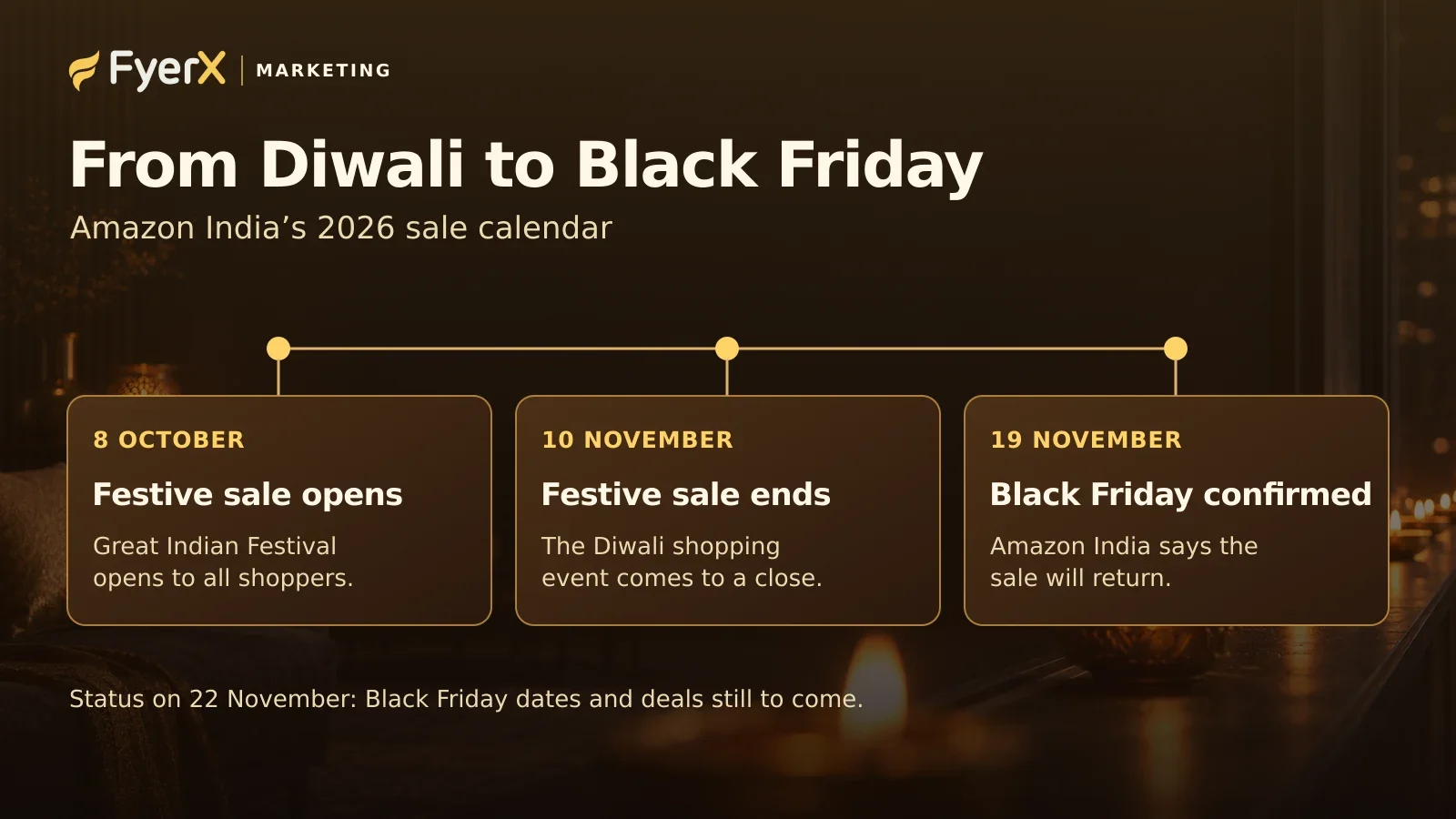
Its Great Indian Festival ended on 10 November 2026. Nine days later, Amazon India updated its newsroom to confirm that its Black Friday sale would return. As of 22 November, its official page still says the dates and specific deals will be announced. The update already gives shoppers something to do. Save what you’ve been thinking about, compare products and set an alert for a price drop.
That invitation helps explain why a retailer would come back so soon after Diwali. There’s the washing machine someone put off replacing, the headphones they saved and forgot about, and the face wash they run out of every month. Those are three different reasons to open the same app again.
What the Great Indian Festival left behind
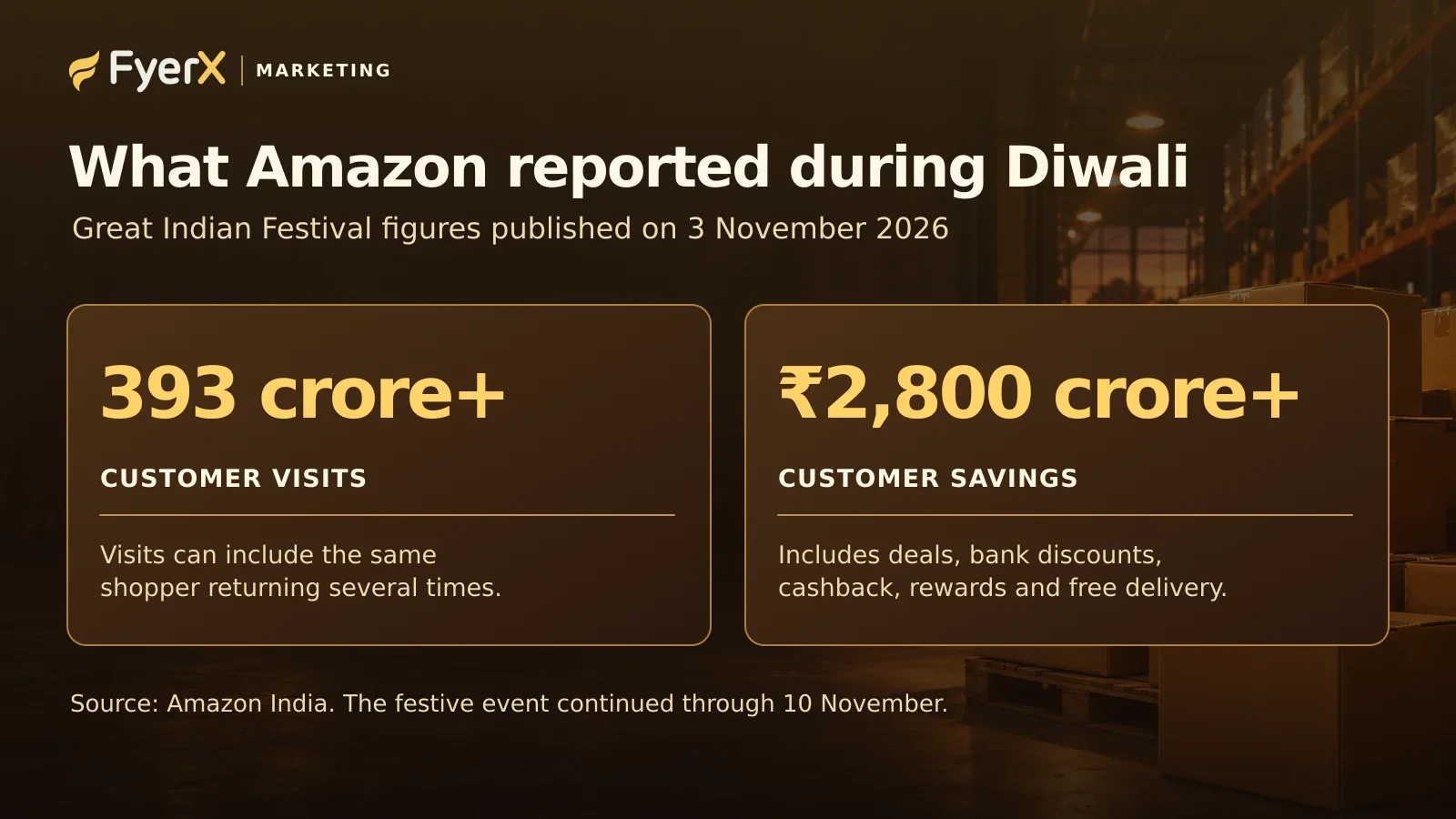
By 3 November, while the sale was still running, Amazon India reported more than 393 crore customer visits and over ₹2,800 crore in customer savings. Its savings figure included deals, bank discounts, cashback, Amazon Pay rewards and free Prime deliveries. Visits can include the same person coming back several times. The figures show how much activity the event generated while it was still underway.
The wider market was busy too. Datum Intelligence estimated that India’s festive online sales, including quick commerce, reached ₹1,40,800 crore over 34 days, about 17% above its estimate for the 2025 festive period. That measures the value of goods sold across the market. Amazon’s savings figure measures what Amazon says customers saved on its platform. Each tells a different part of the festive shopping story.
For a retailer, the next question is what people did between those visits. One shopper might have compared three laptops and bought none. Another might have joined Prime to get a Diwali order delivered faster. A third may have spent the festive budget with a different retailer. A new sale gives each of them another occasion to look, and their reasons for returning can be very different.
Why Black Friday gives Amazon a different reason to contact you
Diwali shopping often comes with a deadline that matters at home. The gift needs to arrive before you leave for your parents’ place. The clothes are for a particular day. A replacement phone or desk chair can sit on the wish list for weeks.
Amazon’s Black Friday announcement includes smartphones, electronics, home and kitchen, fashion, beauty and everyday essentials. That’s a broad list, and many of those categories were also in the Great Indian Festival. What can change is the reason for buying. One shopper wants a price that finally makes the laptop worth it. Another wants to replenish the items they use every day. Both can find something to do during the same event.
Amazon’s announcement makes that visible. It suggests adding products to your wish list or basket in advance, using Alexa for Shopping to compare products and setting deal alerts where available. It also suggests using past orders to assemble a basket of everyday essentials. A customer who has already picked a product can move quickly if the price changes. Someone who is restocking can start with the things they have bought before.
What Amazon and its sellers can gain from a second sale
A second sale gives Amazon another reason to bring customers back after the festive rush. Amazon said that, by its 3 November update, the Great Indian Festival had recorded its highest Prime sign-ups for any shopping event on Amazon.in. A later event offers a chance to see whether people who first used the service during Diwali come back for a different need. That’s one possible benefit of the timing and the way Amazon is promoting the sale.
Sellers have their own reasons to participate. A brand might have stock left from its festive promotion, a newer product it wants people to try, or a popular item that can draw buyers to a bundle. Participation also gives a seller a way to reach people who were still comparing options during Diwali. The offer makes sense only if the extra orders justify the cost of selling them.
Picture a homeware seller trying to move the last 300 units of a kitchen appliance before its supplier ships a new model. A discount can free up shelf space and cash. A seller that already sells out at full price faces a different decision. For that business, a bundle or a promotion on an accessory could make more sense than cutting the price of its bestselling product.
What a ₹300 discount can do to a seller’s numbers
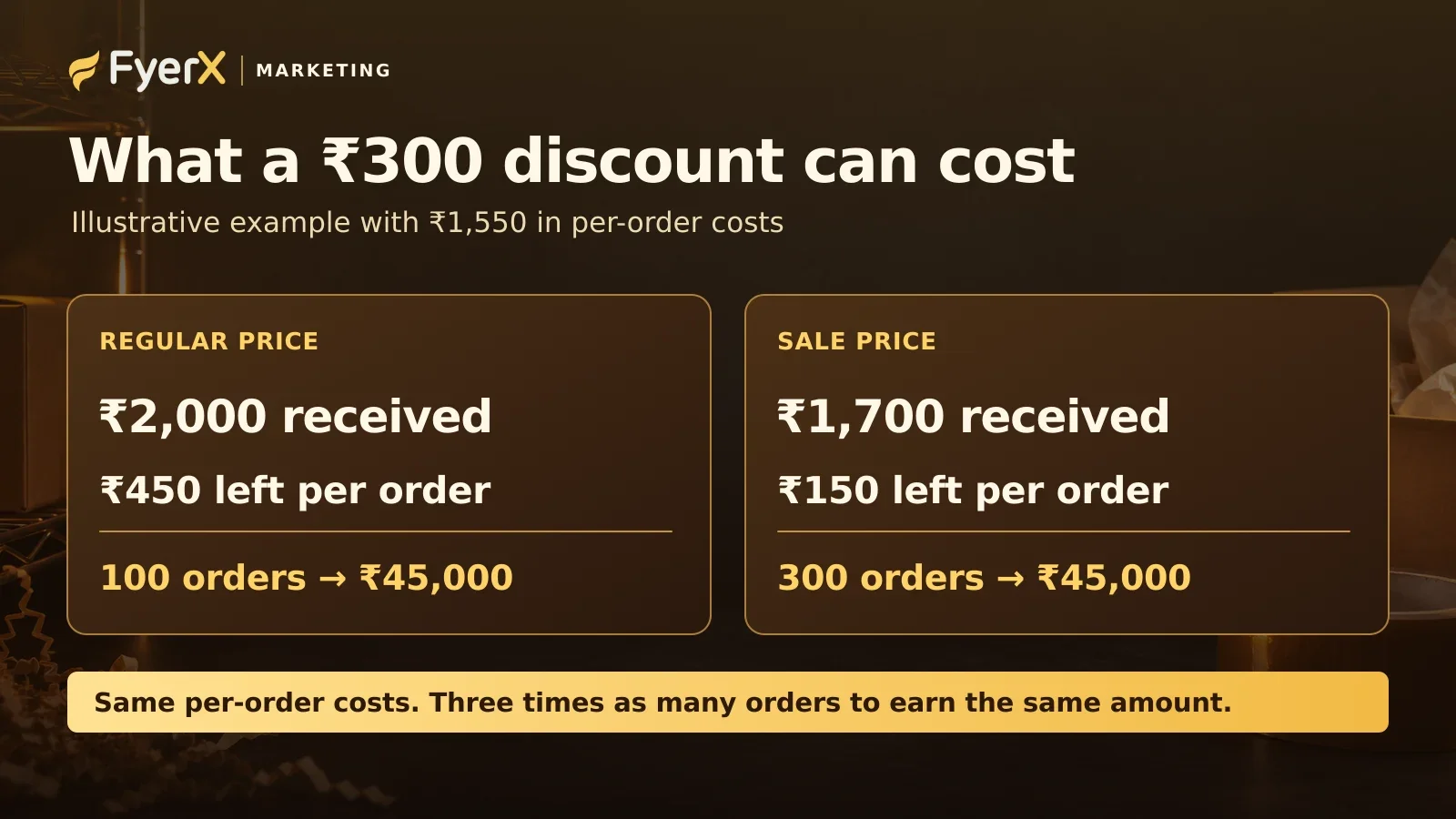
Take one illustrative order. The seller receives ₹2,000 before per-order costs. Product, marketplace and fulfilment costs total ₹1,350, and advertising adds ₹200 per order. That leaves ₹450 after those costs. If the seller’s proceeds fall to ₹1,700 during the sale and the costs stay the same, the amount left falls to ₹150 per order.
At the regular price, 100 orders leave ₹45,000 after those costs. At the discounted price, the seller needs 300 orders to reach the same amount. Even doubling the order count would leave only ₹30,000. That’s how a campaign can look busy in the seller dashboard while leaving less money in the business.
The example holds costs steady to show the effect of the discount. Real marketplace fees can change with price, some offers may be funded by a platform or a bank, and return rates can move. Before planning a second sale, a seller should know who funds the offer, what it pays to win an order, and what happens when customers return the item.
What Indian brands can learn from Amazon’s Black Friday timing
Start by asking what your Diwali campaign left unfinished. If a lot of people viewed a premium product and few bought it, find out what held them back. A restored size, a clearer comparison or a reliable delivery date may give them a reason to return. If repeat buyers are due to restock, show them the products they’re likely to need. If a product already sells at full price, there may be little reason to discount it alongside everything else.
Then give each group a clear reason to open the message. “The size you wanted is back” tells a shopper what changed. “Your usual skincare bundle is ready to reorder” helps someone who already knows the product. If the main reason is a better price, make it easy to see the final amount and any conditions before checkout.
Amazon India’s announcement offers shoppers several ways back into the app shortly after Diwali. The question for a smaller brand is whether it has a worthwhile reason to invite people back and whether the offer pays for itself. A second campaign is worth running when you can answer both.
FyerX Marketing helps ecommerce brands plan the campaign that comes after a big sale, using what shoppers viewed, bought and came back for. We can connect the offer, paid media, landing page and follow-up so you can see which sales justify the spend.
Planning your next ecommerce sale? Talk to FyerX Marketing about the offers, audiences and numbers you want the campaign to deliver.
Looking for marketing support?
Tell us what you want to achieve and where your team could use support.
Talk to FyerX Marketing