Imagine opening the newspaper and landing on an obituary page. There are photographs, names, ages and a few lines about the people pictured. Then you read to the bottom and realise you’re looking at an ad for a sale. The people are alive. The discounts are about to expire.
That was the joke in a Flipkart print ad in August 2026. Some readers got it. Others wanted to know why an online sale needed a joke about death. By then, the people sharing the ad had found a more interesting topic than the sale itself.
That kind of turn is worth studying. This year, a jewellery brand pulled a festival film, a cleaning brand was told to take down disputed ads, and some copy on a ride-booking screen drew a ₹10 lakh penalty. These five cases stand out for what happened publicly, from a campaign losing control of its message to a regulator formally ordering a change. The public record tells us more about those consequences than it does about any campaign’s return on investment.
1. Flipkart made its Freedom Sale look like an obituary
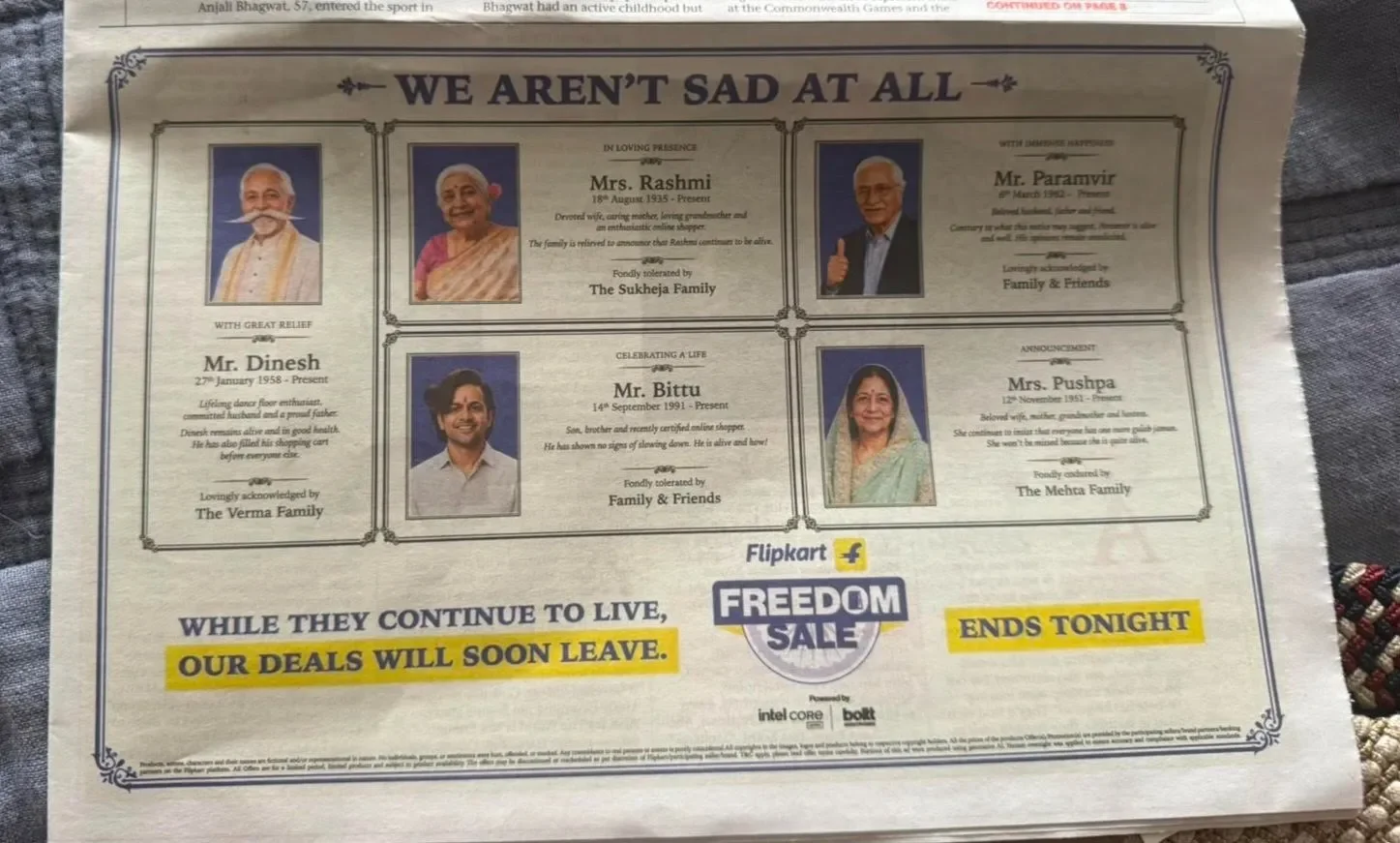
Flipkart had a familiar retail problem. How do you tell people a sale is ending when every other shopping app is also telling them to hurry? Its answer was to borrow a page layout that gets people to slow down. In August, the Freedom Sale ad appeared in Mumbai Mirror dressed up as an obituary page, complete with portraits, ages and short tributes. The reveal near the bottom explained that the deals were the things about to go.
The joke depended on the order in which people read the page. A reader who made it to the last few lines could see the connection to the sale. A reader who saw a cropped photo in a WhatsApp group could easily get a different first impression. Author Shobhaa De publicly criticised the ad and called for a boycott. Reporting by afaqs! also captured readers who defended the joke. The ad got attention, and much of the public debate centred on whether the format was appropriate.
There’s a simple way to test this kind of idea. Give someone the newspaper layout for three seconds, take it away and ask them to tell you what they just saw. Then show them the screenshot that’s most likely to circulate. If their description is “an obituary” both times, your offer is doing all its work in the one part of the ad people might miss.
2. GIVA pulled its Raksha Bandhan film with Kriti Sanon
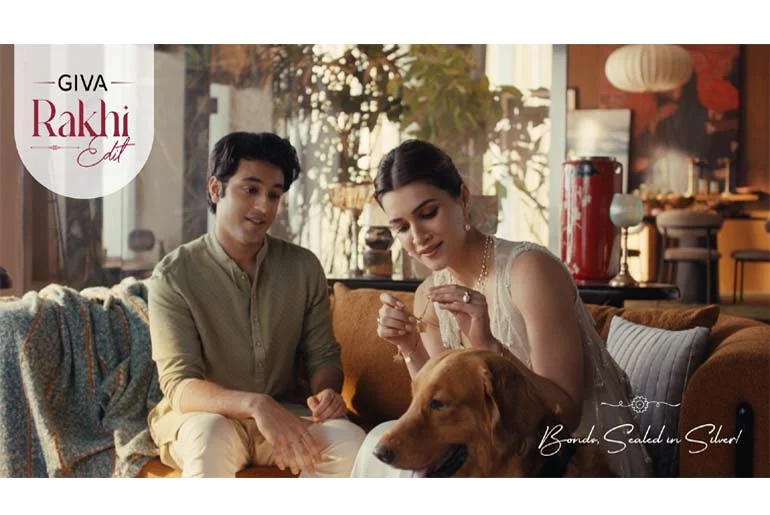
GIVA’s August film took the idea of Raksha Bandhan as a celebration of protection and affection and included a pet dog in that circle. In the ad, Kriti Sanon tied a rakhi to the dog. Some viewers objected to that scene or to Sanon’s outfit. Others defended the film and questioned why a woman’s clothes had become the focus of a festival ad.
GIVA withdrew the ad from all media on 26 August. Founder Ishendra Agarwal later said the company still stood by the campaign’s intent and had acted out of concern for the safety of staff and stores. That detail matters. The problem had moved from what people were saying about a film to what the company said its employees were facing on the ground. Mint and India Today reported the founder’s explanation.
A pre-launch discussion with people who celebrate the festival in different ways might tell you which part of the film they’re most likely to talk about. It can also help the team decide what it stands behind and prepare an answer it can give to customers and employees. A jewellery brand with physical shops has another question to settle in advance. If a video starts drawing hostile attention, who checks in with its store teams and decides when to intervene?
3. Pond’s painted portraits that faded in the sun
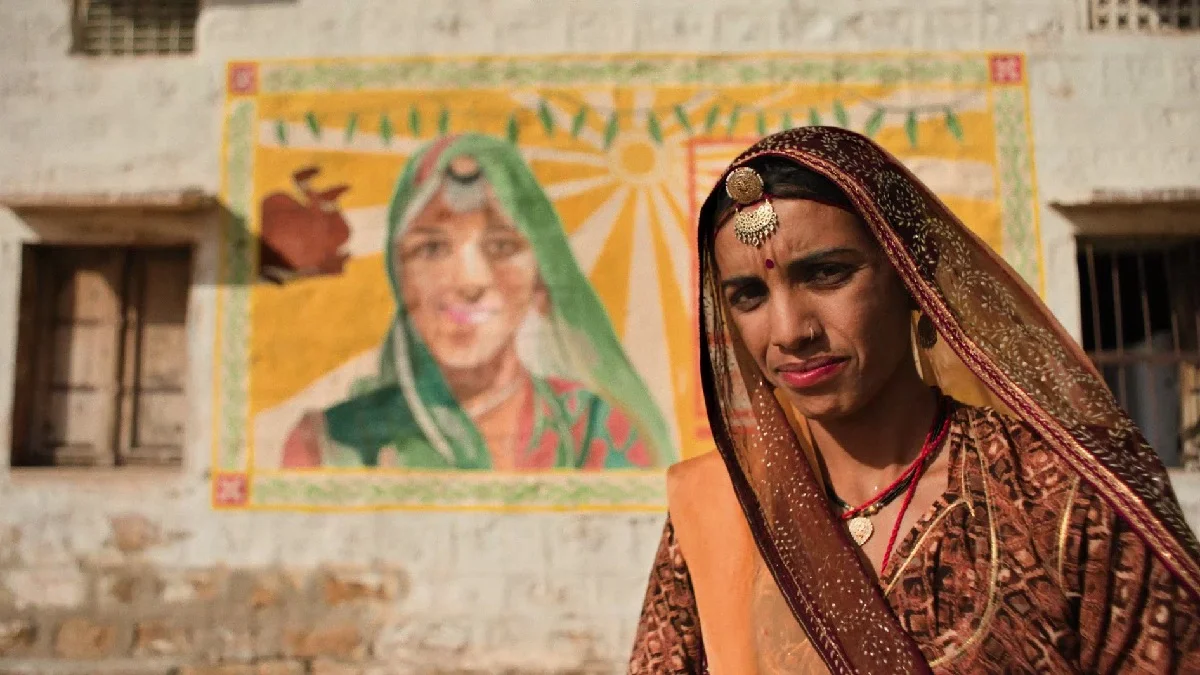
In April, Pond’s and Ogilvy India brought a sunscreen campaign called Sun Portraits to Phalodi, Rajasthan. Artists working in the traditional Rajasthani Phad style painted life-size portraits of local women on the walls of their homes. The paint reacted to ultraviolet light. As the portraits faded, they were meant to make the effects of prolonged sun exposure visible.
It’s an image you can picture without seeing the film. It also brought up a question the artwork couldn’t answer on its own. What would the women who took part get out of the project after the campaign wrapped? Social Samosa and ThePrint reported criticism about how the women were represented and what support was planned. Critics asked about practical help, such as access to a dermatologist or protective supplies women could use after the shoot.
There was a straightforward way to make the story stronger. Decide with participants what support they actually want and report back on what the brand delivered. If the plan includes a clinic, distribution of protective supplies or a follow-up visit, show the dates, the people responsible and what happened after the first shoot. The fading portrait can earn the attention. The follow-through gives viewers an answer when they ask what the campaign did for the people in it.
4. Beco’s comparison with Surf Excel and Vim ended up in court
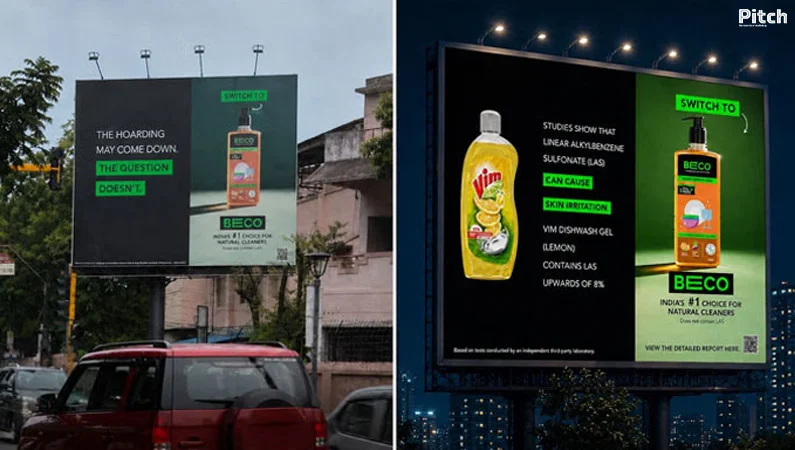
Home-care brand Beco made its rivals part of its War on What’s Hidden campaign. The ads identified Hindustan Unilever’s Surf Excel and Vim and raised questions about ingredients in those products. The work ran across formats, including hoardings and online video. The two names gave shoppers an instant point of reference. They also gave HUL a specific set of claims to challenge.
HUL’s lawyers told the Delhi High Court that individual campaign reels had crossed 56 lakh views and that Beco’s YouTube ads had collectively passed 10 lakh views before the suit could be filed. On 10 September, the court issued an interim order restraining Beco from continuing with the disputed advertising and directing removal of the material within a week.
A test report and a billboard can tell different stories about the same ingredient. On the report, there’s room for the concentration studied, the test method and the conditions of use. On a hoarding, people may remember the competitor’s name and one word about skin irritation. Before approving a comparison, put the short version in front of someone who’s never seen the brief. Ask what they think the rival product does in normal use. Then check whether the evidence supports the answer they give.
5. Rapido’s booking prompts led to a ₹10 lakh penalty
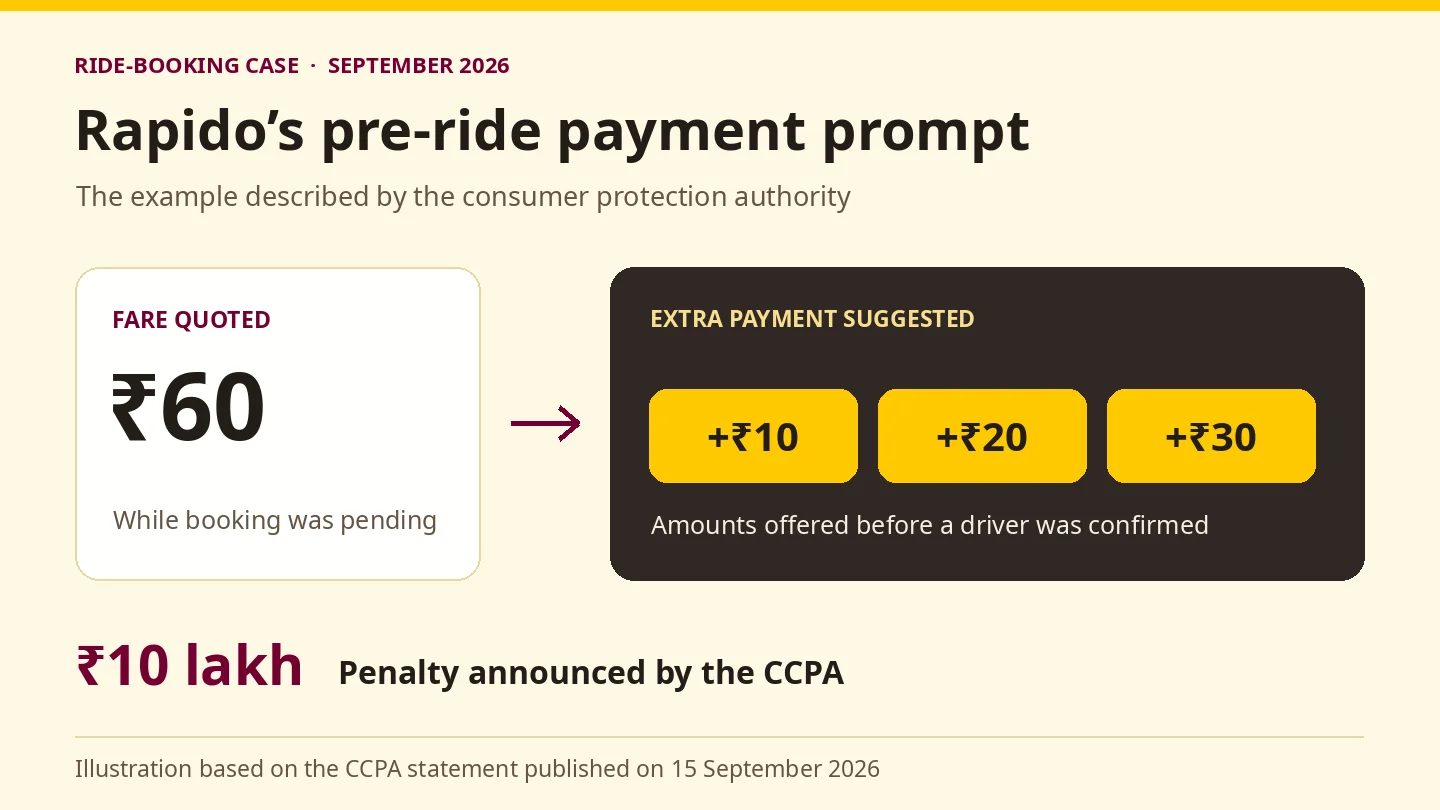
You’ve requested a ride at ₹60. You’re waiting for a driver and the app suggests adding ₹10, ₹20 or ₹30. At that point, it can feel as though your choice is to pay up or risk waiting longer. That was the situation the Central Consumer Protection Authority examined in Rapido’s booking flow.
In an action announced in September, the authority imposed a ₹10 lakh penalty on Rapido’s operator and directed it to discontinue the misleading prompts. The authority said the timing and design put pressure on riders who had already chosen a fare. Rapido argued that paying more was voluntary and that its matching system kept working either way. The authority said the company had provided no data to show that paying more actually improved the chances of getting a ride.
This example happened inside an app while someone was trying to get somewhere. It’s easy to see why a team looking at a dashboard might celebrate an increase in extra payments. The rider who sees the prompt has a more immediate concern. They want to know whether the price they just agreed to still means anything. If an app promises a faster or more likely outcome, the people approving that line should be able to show the data behind it and explain what happens when a customer declines.
What Indian brands can take into their next campaign
The Advertising Standards Council of India reviewed 11,581 cases involving 9,841 advertisements in the financial year ending March 2026. The case count was 21% higher than the previous year. Those numbers cover cases ASCI reviewed, including work it flagged through its own monitoring. They give some context for how many claims and creative decisions are being examined after publication.
Before the next launch, try a review that resembles how the ad will actually be seen. Put the billboard up at phone size. Read the offer after stripping away the surrounding copy. Ask someone who had nothing to do with the campaign what it promises. Then try delivering that promise yourself, all the way from the first click to the checkout screen. You’ll often find the awkward part long before a customer has to point it out.
The people in these stories had reasons to pay attention. They wanted a deal, recognised a festival, cared about the women in a film, wanted to know what went into their detergent, or simply needed a ride. A good campaign knows what that person came for and gives them something worth remembering. If someone brings up your campaign at dinner tomorrow, you want them to be able to tell the story and still remember why they’d choose your brand.
Looking for marketing support?
Tell us what you want to achieve and where your team could use support.
Talk to FyerX Marketing