
You’ve got a Friday off and ₹20,000 to spend. Goa sounds like a plan until you open three tabs and realise the hotel you liked costs ₹5,000 per night, the cheaper flight lands late, and you still need money for food and getting around.
So you ask MakeMyTrip’s AI assistant, Myra, one question. “Can I do three days in Goa for under ₹20,000?”
You’ve given it a destination, a duration and a budget. It still has to work out what the budget covers, which options fit together, and what you can actually book. That gap between a nice idea and a workable trip is where the technology gets interesting.
What MakeMyTrip’s Myra needs to know before it searches
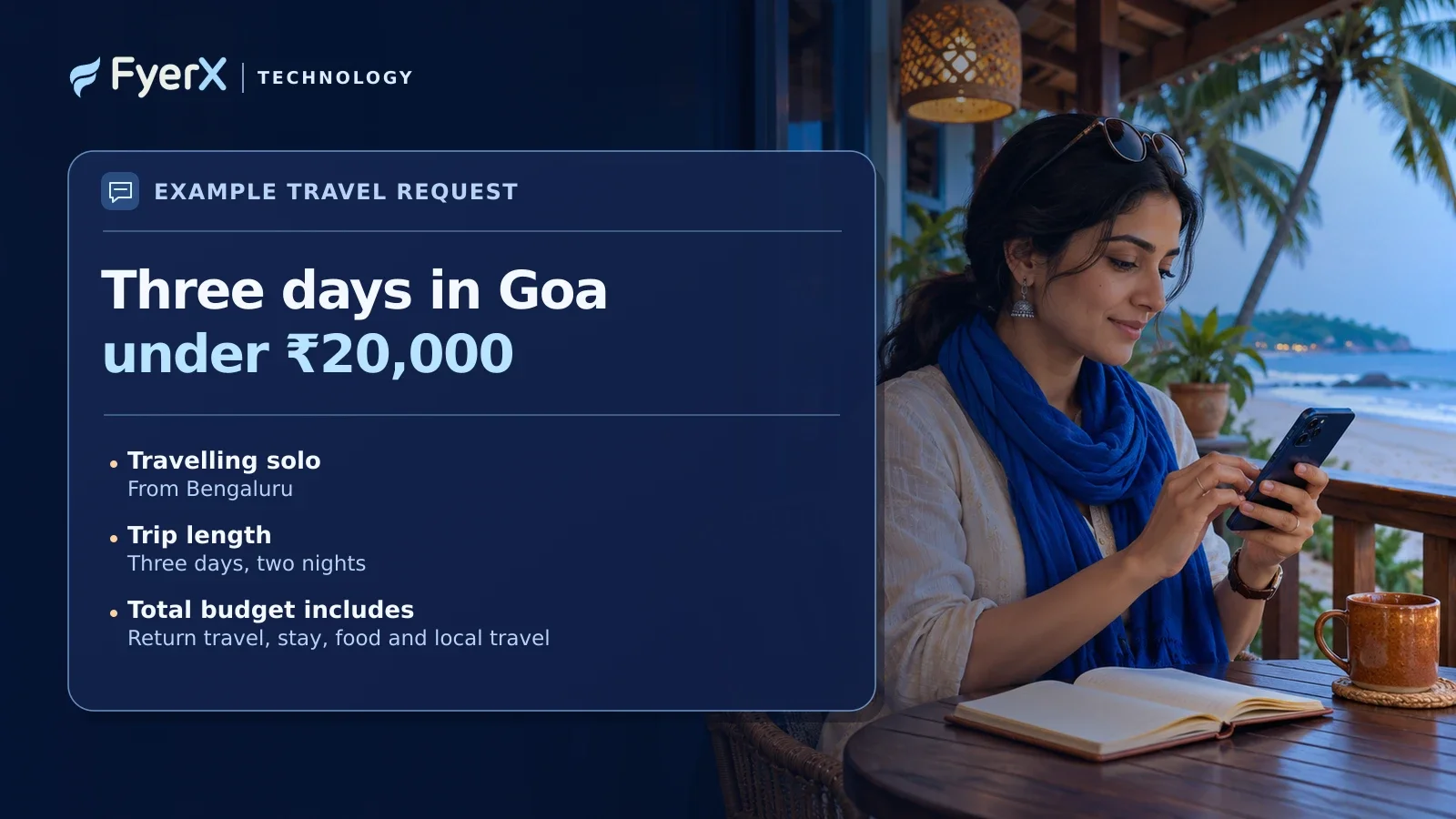
Take that first message. “Three days” could mean two nights, and “under ₹20,000” could mean the entire trip or just the transport and hotel. If the AI guesses wrong, you could get a convincing plan that spends your whole budget before you’ve had your first meal.
Here’s a better starting prompt for the same example.
I’m travelling solo from Bengaluru to Goa for three days and two nights. My total budget is ₹20,000, including return transport, the stay, food and local travel. I want some beach time and a relaxed schedule. What dates and transport options would make this easier?
Now there’s enough information to compare useful options. Your departure city and party size change what transport and accommodation cost. Two nights tells the system how to read a room price. “Relaxed schedule” helps it understand why a cheaper arrival time might be a poor fit. If your dates are flexible, say how flexible. If you must be back by Sunday evening, say that too.
MakeMyTrip’s August 2025 launch announcement described Myra taking open-ended questions by voice and text, with results informed by availability and pricing. That makes an everyday request like this a sensible place to start. The trip in this article is an illustrative walkthrough.
How MakeMyTrip’s AI turns a Goa request into options
A language model can interpret what you mean by “a quiet place near the beach.” To make that helpful, the platform also needs search results and booking information it can bring into the conversation.
MakeMyTrip Group CTO Sanjay Mohan told Inc42 in October 2026 that Myra coordinates around 10–12 specialist AI agents, including ones for flights and accommodation. Microsoft has also described an Azure-based setup that coordinates specialist agents for the travel experience. In plain English, different parts of the system can handle different jobs, while a coordinating layer keeps track of the traveller’s request.
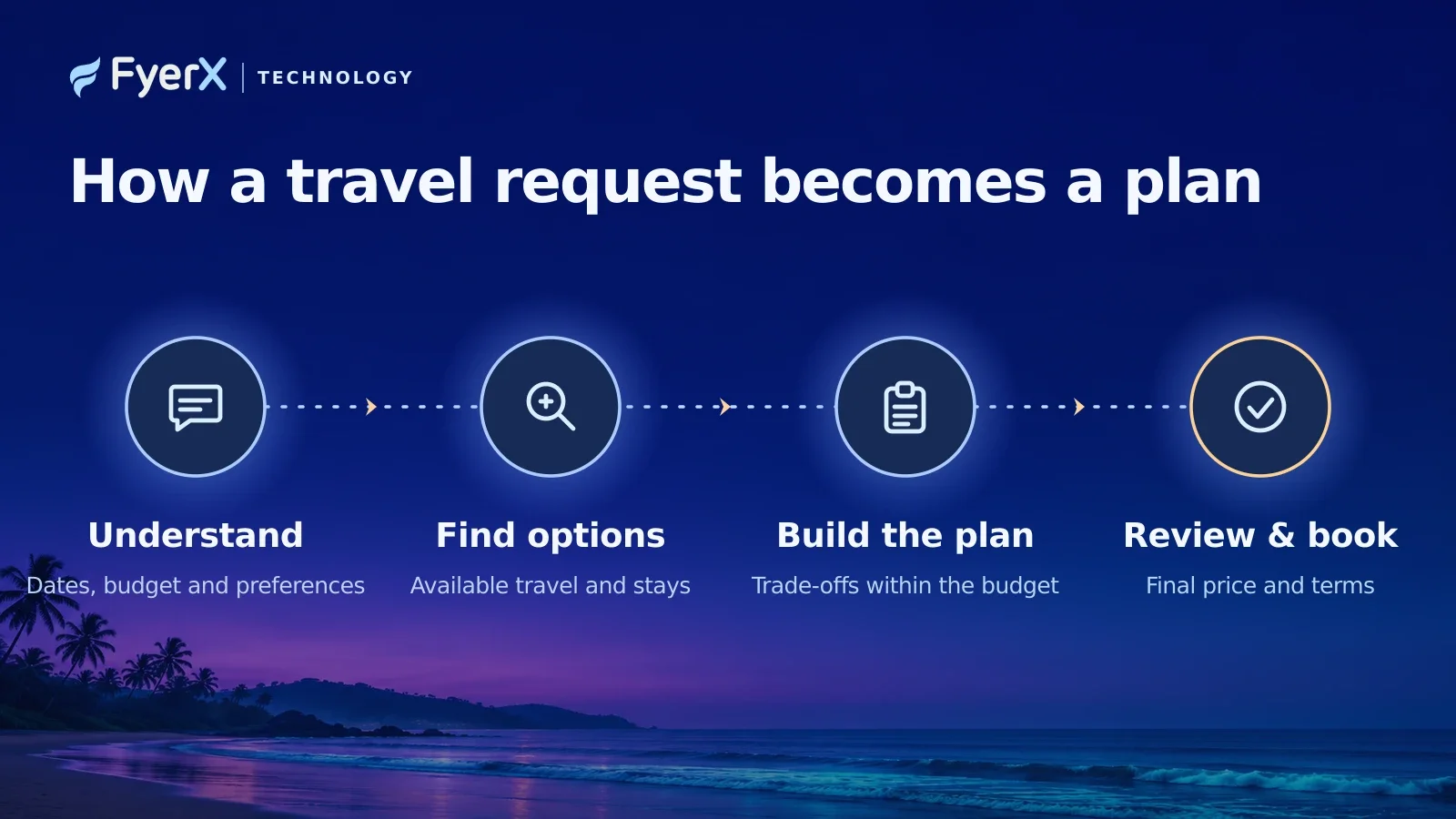
Here’s how that can play out for our Goa example.
Understand the request. Pick up the origin, destination, length of stay and overall budget. Ask for dates or a return deadline where a missing answer would change the options.
Check what’s available. Look for bookable options in supported categories, such as a flight and a place to stay. The assistant can use that travel inventory to give you something specific to compare.
Build a plan around the constraints. If a faster flight eats too much of the budget, compare what you’d gain by changing the dates, shortening the stay or choosing a different way to travel. Keep the money you set aside for food and local travel visible.
Review the trip before booking. Look at the options you’ve selected, confirm the final total and check what you can change or cancel. MakeMyTrip has reported that Myra supports payments within the conversation for its booking experience.
Search itself also changes. A filter can find rooms under a certain price. Understanding a phrase like “somewhere quiet” takes more context. Mohan described MakeMyTrip using search that interprets meaning and connects related information. In the Goa example, it can be worth asking what makes a stay fit that preference. A place close to the beach could still face a busy road, and “near” can mean a walk or a ride depending on where you plan to spend your time.
The follow-up is where the chat format earns its place. Say you reply, “Keep the ₹20,000 cap, but I’d rather pay a little more for a shorter journey.” You’ve changed your preference about transport while keeping the trip budget. A useful answer shows where the extra transport cost comes from, so you can decide whether saving time is worth changing the stay or trimming other spending.
Can a three-day Goa trip really fit under ₹20,000?
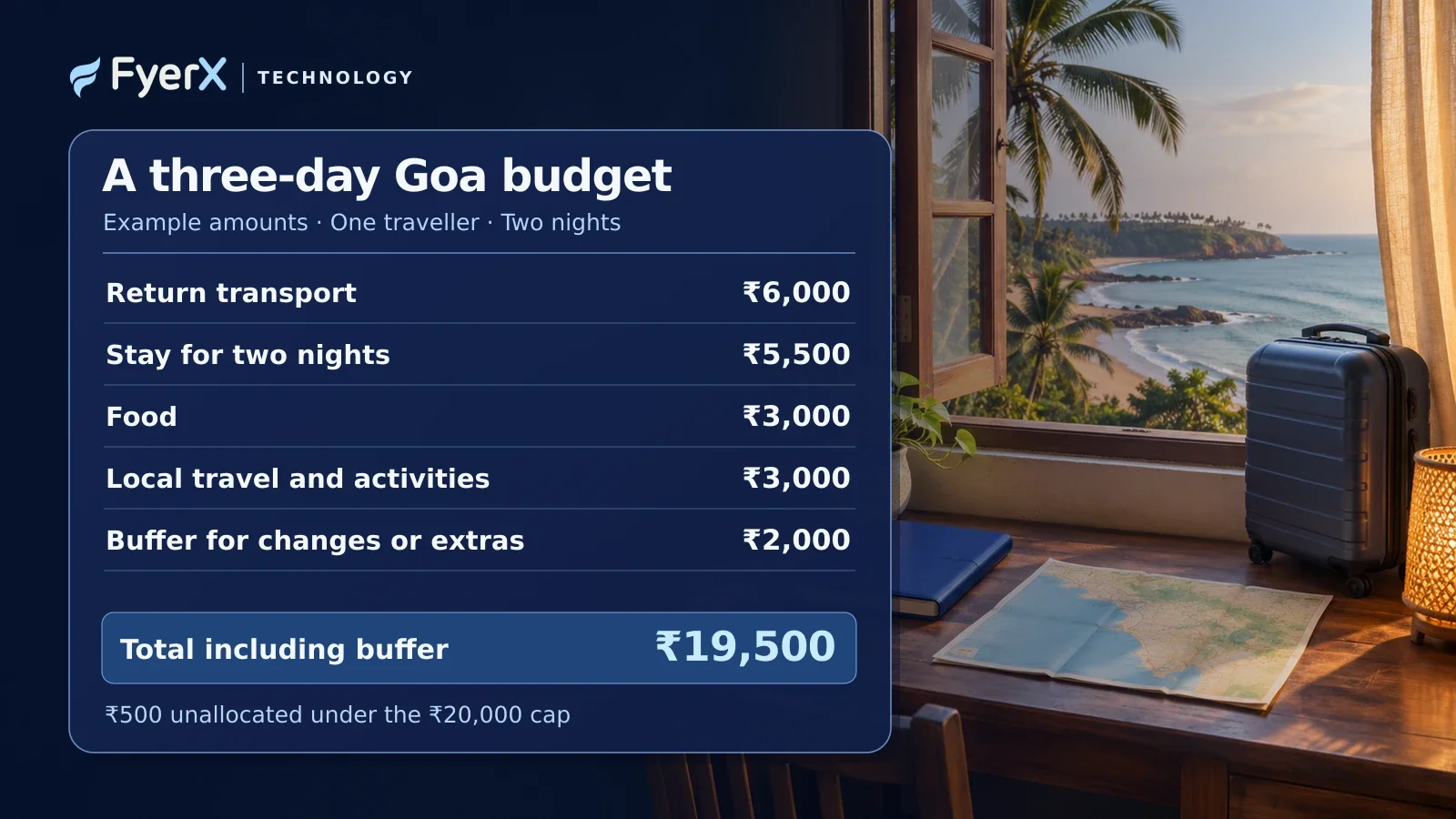
For a solo trip of two nights, here’s what a sensible allocation could look like. These are example amounts to show the trade-offs. Prices depend on your dates, availability and what you choose.
Return transport — ₹6,000
Stay for two nights — ₹5,500
Food — ₹3,000
Local travel and activities — ₹3,000
Buffer for changes or extras — ₹2,000
That comes to ₹19,500 including the buffer, leaving ₹500 of the original cap unallocated. If the stay comes to ₹7,000 at checkout, the total rises to ₹21,000. You can see exactly what needs to change before you book.
This is where I’d give the assistant a second question. “Separate the items I can book now from the costs you’re estimating. Show the final amount including taxes, and tell me where I’d have to spend less if the stay costs more.” A precise-looking total is much easier to use when you know which parts are confirmed and which still depend on your choices.
One detail worth checking is which price the conversation is using. A per-night rate can look good while the two-night total stretches the budget. A discount might depend on a particular card or fare. Before you pay, check the price for the exact room or seat you selected and read the refund terms. That final review is part of turning an itinerary into a real booking.
Why MakeMyTrip is putting AI inside the booking journey
A search box is good at a defined job, like finding hotels for two nights. A conversation gives you a place to express a combination of needs, like “I’ll take a simpler room if the return flight gets me home before dinner.” It can also make it easier to ask those questions in a language you’re comfortable speaking. MakeMyTrip’s annual filing says Myra supported conversational interactions in seven Indian languages and English as of 31 March 2026.
In its October 2026 results, MakeMyTrip said Myra handled more than 90,000 daily conversations and assisted with more than 3,000 completed bookings per day on average during the quarter ended 30 September. Those are two different measures. Conversations include people exploring and asking questions. The second figure counts completed bookings where the assistant helped.
The AI can help build the trip. You still decide what’s worth paying for.
A good answer to “Goa under ₹20,000” should tell you what fits, where you’re making a trade-off and what to verify before paying. If moving the date saves enough for a better stay, you can decide whether that’s worth taking another day off. If the return journey cuts into your last afternoon, you can decide how much that beach time is worth.
That’s the difference you feel when the plan is useful. You can point to the hotel, the way home and the money left for dinner, and see how they fit together.
FyerX Technology helps teams connect AI assistants to the data and workflows they need to carry out a useful task. That includes mapping where current information comes from, how the assistant should handle missing details, and when a customer or team member should confirm the next step.
Building an AI assistant that needs to search, compare or act on live business data? Talk to FyerX Technology about connecting it to the right systems.
Looking for technology support?
Tell us what you need to build, improve, or manage.
Talk to FyerX Technology