Imagine being asked to cut a trailer for a film whose audience can already name the hero, the villain and the battles they want to see. You can’t build the whole campaign around what happens next. Some viewers heard the story as children. For others, a television adaptation or a school play was their first encounter with it. Some will be coming to this version with their children.
That was the assignment facing Nitesh Tiwari’s Ramayana: Part One, which opened in cinemas on 5 November 2026 with Ranbir Kapoor as Rama, Sai Pallavi as Sita and Yash as Ravana. The campaign had to answer a question that mattered more than the film’s plot. What will I get from seeing this version in a theatre?
The answer came in stages. The first full trailer showed the world the filmmakers had built. Later promotions gave the lead actors and regional audiences their own moments. As release approached, the campaign gave interested viewers a date, a language and a format they could book.
How the Ramayana trailer made a familiar story feel new
A trailer for a thriller can get away with showing a locked door and making you wonder what’s behind it. A story as widely known as the Ramayana has a different advantage. The audience already cares about certain moments. Showing how those moments will look and sound can give people a reason to see them again.
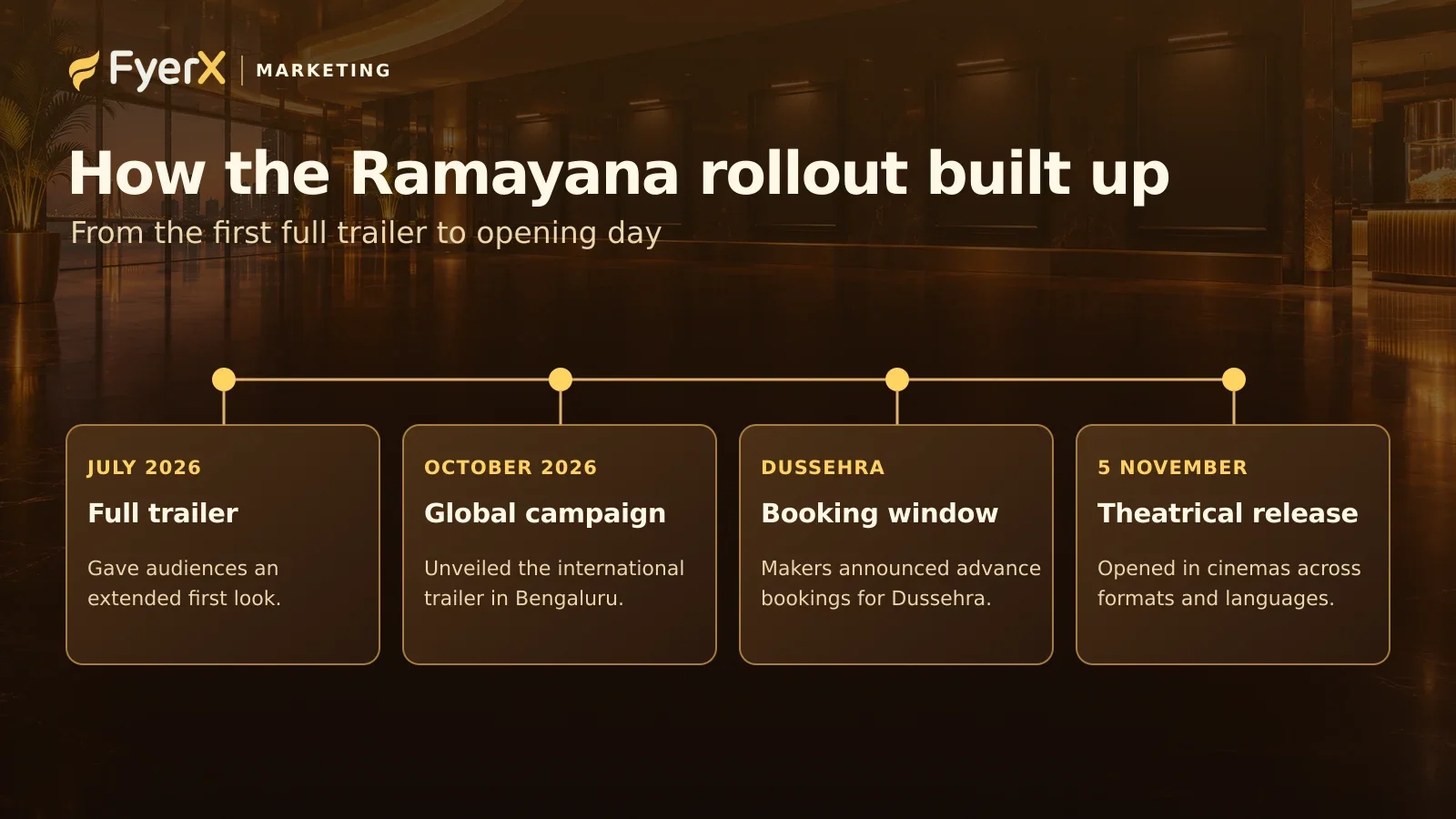
Business Standard reported that the first full trailer, released in July, ran about four minutes and was unveiled in five languages. It showed familiar parts of the story, including Sita’s swayamvar and the start of the exile. A viewer could recognise the events and still be curious about the interpretation, performances and scale of the film. The filmmakers also promoted premium theatrical formats, including IMAX. That made the screen part of the proposition. Once you sell the scale of a film, the details people see at booking matter more. If someone saw the trailer and wanted the biggest screen available, the next thing they needed was a listing for a premium show at a time and location that worked. The experience promised in the ad had to be easy to find.
The timing helped give different pieces of the campaign different jobs. In July, the full trailer gave people their first extended look. In October, the makers confirmed the release date and announced that advance bookings would open on Dussehra. The international trailer was unveiled at a Bengaluru event in October, alongside individual posters for Ranbir Kapoor’s Rama and Yash’s Ravana. By 5 November, the audience had gone from seeing what the film looked like to having a specific show to choose.
What Ranbir Kapoor, Sai Pallavi and Yash each brought to the campaign
Casting creates several ways for people to come into the same story. Someone who watched Yash in KGF may want to see how he plays Ravana. Someone who follows Sai Pallavi may be curious about her portrayal of Sita. A viewer drawn in by Ranbir Kapoor can have a different first reason to pick up the same ticket.
The October poster release shows what that looks like in practice. Giving Rama and Ravana separate posters let viewers spend time with each interpretation before seeing the confrontation on screen. The Bengaluru event also brought several cast and crew members together, so there were more faces and moments for entertainment outlets and fans to share.
For marketers, the useful question is what the person helps the audience imagine about the product. A famous face can get someone to pause for a second. The casting becomes part of the campaign when that person also gives the audience a reason to keep watching.
Why the five-language release mattered
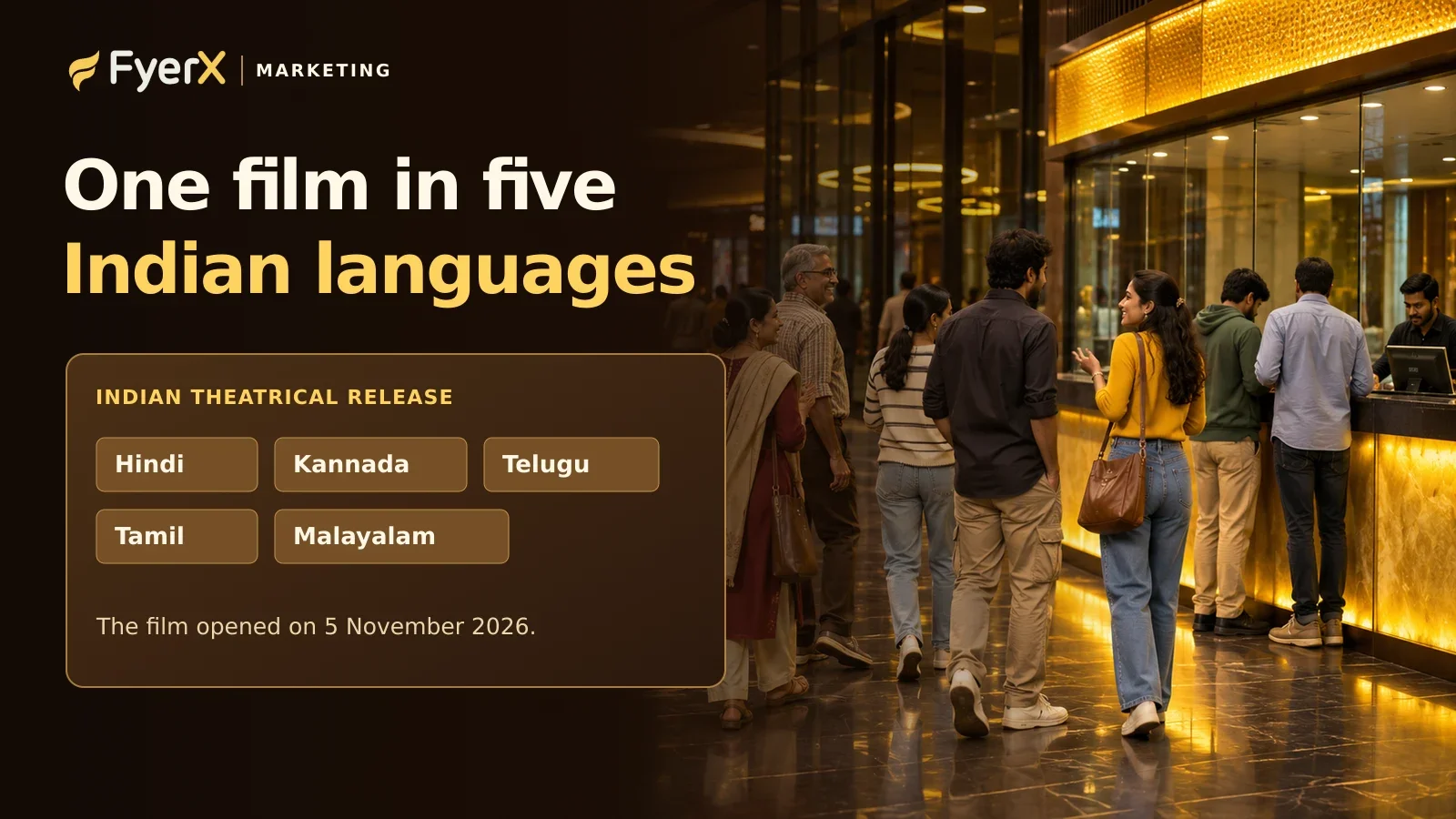
Prime Focus’s November investor presentation listed the Indian theatrical release in Hindi, Kannada, Telugu, Tamil and Malayalam. In practical terms, that gives a family or a group of friends a better chance of finding a version they’d all like to watch. The language on a poster or trailer matters most when the viewer can find a corresponding show nearby.
There were distinct promotional moments, too. The international campaign had its Bengaluru event. The campaign also staged a Telugu pre-release event in Hyderabad, with Ranbir Kapoor, Yash and Sai Pallavi among those featured in the livestream. Those events created footage that could travel further than the room and gave regional entertainment outlets something specific to cover.
The approach went beyond changing the words on screen. The Indian Express reported that the Hindi and English versions of the second trailer framed Rama differently. The Hindi cut included a reference to his divine identity. The English trailer emphasised Rama as a human hero. The same film could meet viewers at different levels of familiarity with the story. The commercial lesson is to ask what the audience already brings to the material before deciding how to introduce it.
What the Ramayana box office tells us about the launch
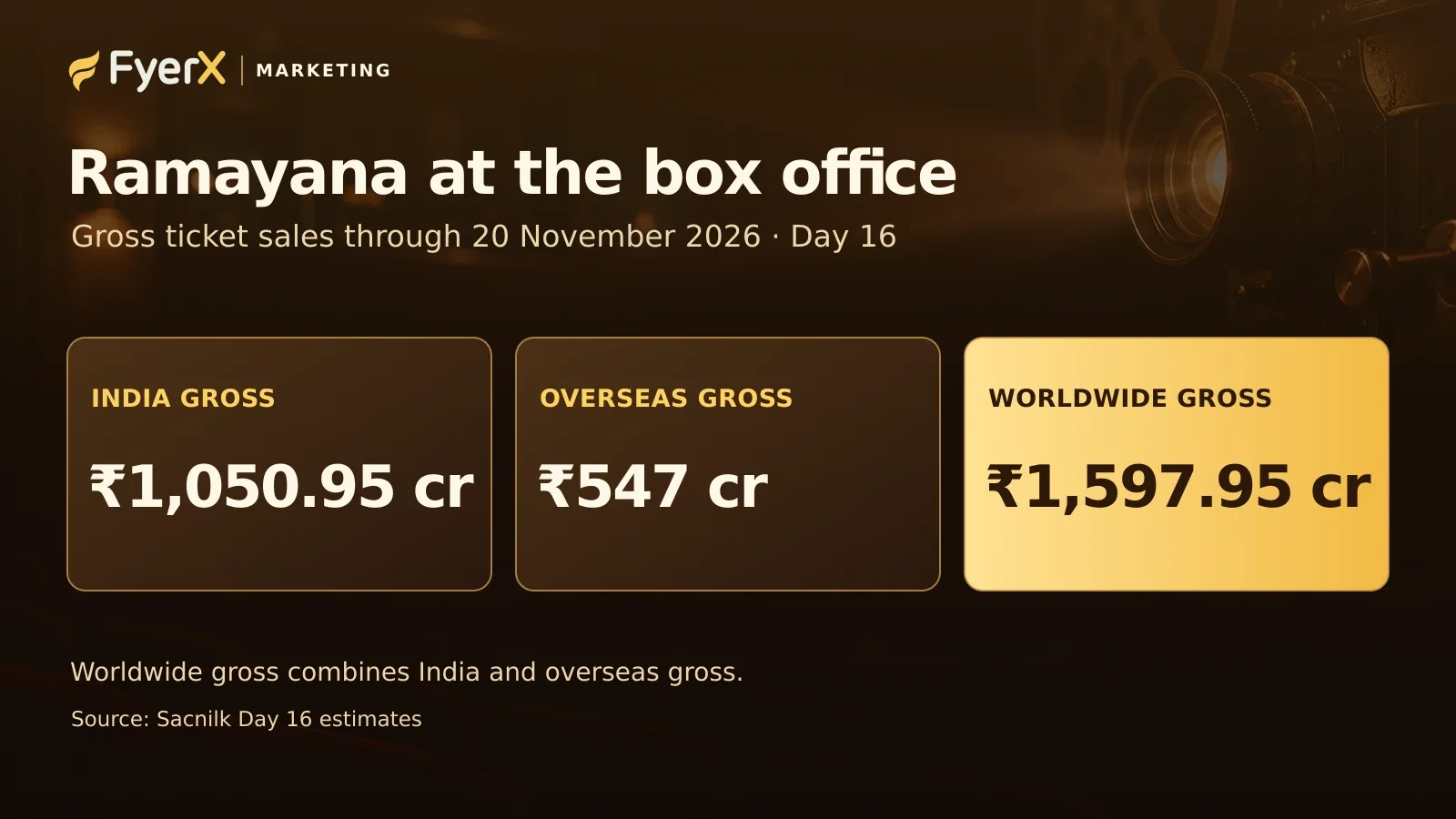
Through 20 November, the film’s 16th day, box-office tracker Sacnilk estimated ₹1,597.95 crore in worldwide gross ticket sales, made up of ₹1,050.95 crore in India gross and ₹547 crore in overseas gross. It separately listed ₹879.50 crore in India net. Worldwide gross combines ticket sales across markets, and India net deducts applicable ticket taxes from the domestic gross. Both figures describe the box office from different angles.
Those totals show the scale of the audience that paid to see the film. To judge any one marketing decision, you’d want finer data. How many advance bookings came after the trailer dropped? What share of premium shows sold out? How many people who saw the Telugu event clips went on to look for a show? Public box-office estimates can’t answer those questions by themselves.
There’s a lesson here for anyone who has been handed a launch report with a big sales number at the top. Separate the outcome from its possible drivers. Look at how search, booking-page visits and purchases changed around each campaign moment. A good result is worth reporting, and the next release will benefit from knowing which choices you can repeat.
What Indian brands can take from the Ramayana campaign
Suppose an Indian sweets brand is relaunching a gifting box people already bought last year. The campaign has a better starting point than it did the first time. Customers know the product and may already have a reason to trust it. Now give them a specific reason to choose it again. Show who the box is for, what changed inside and when it can still reach the recipient. Then make the next step easy to find, whether that’s an order page, a store locator or a WhatsApp conversation.
That’s what makes Ramayana a useful launch case study. A familiar story created recognition at the start. The trailers, cast, languages, formats and booking window gave viewers different reasons to act on that recognition. By the time tickets went on sale, the practical questions were straightforward. Which show do I want, in which language, and when can I go?
FyerX Marketing helps brands work through the same launch decisions, from defining why customers should care now to planning which campaign assets and channels give them a reason to act. We can connect the creative, paid media and landing page so each step carries the same message through to the purchase or enquiry.
Planning a product launch or a fresh campaign for a familiar brand? Talk to FyerX Marketing about the audience, message and next step you want people to take.
Looking for marketing support?
Tell us what you want to achieve and where your team could use support.
Talk to FyerX Marketing