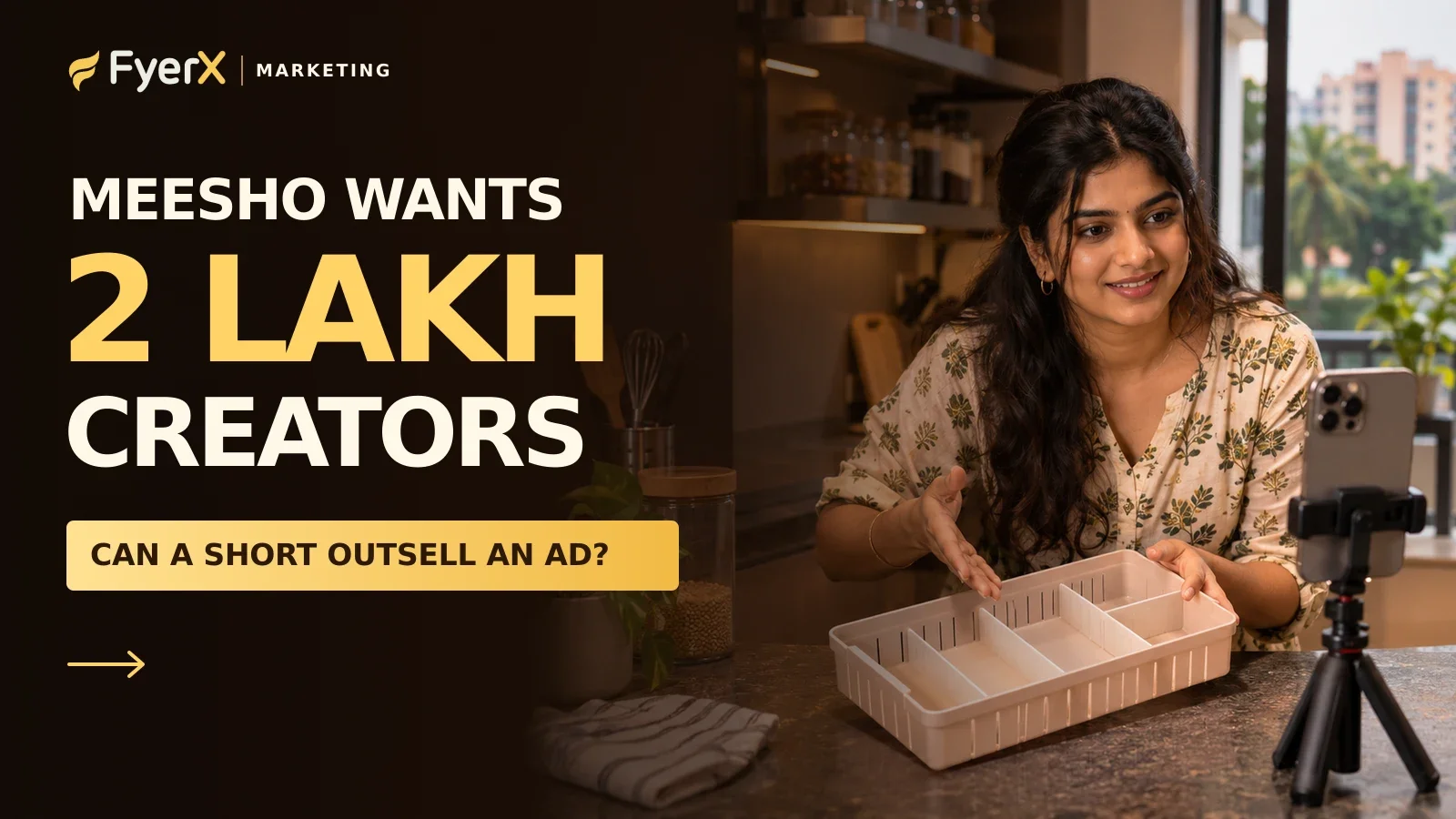
A creator opens a messy kitchen drawer. In 30 seconds, she fits an organiser inside, shows what it holds and gives you its dimensions. You’ve seen enough to check whether it would fit in your kitchen. The product is tagged in the YouTube Short, so you can tap through to Meesho and look at the price.
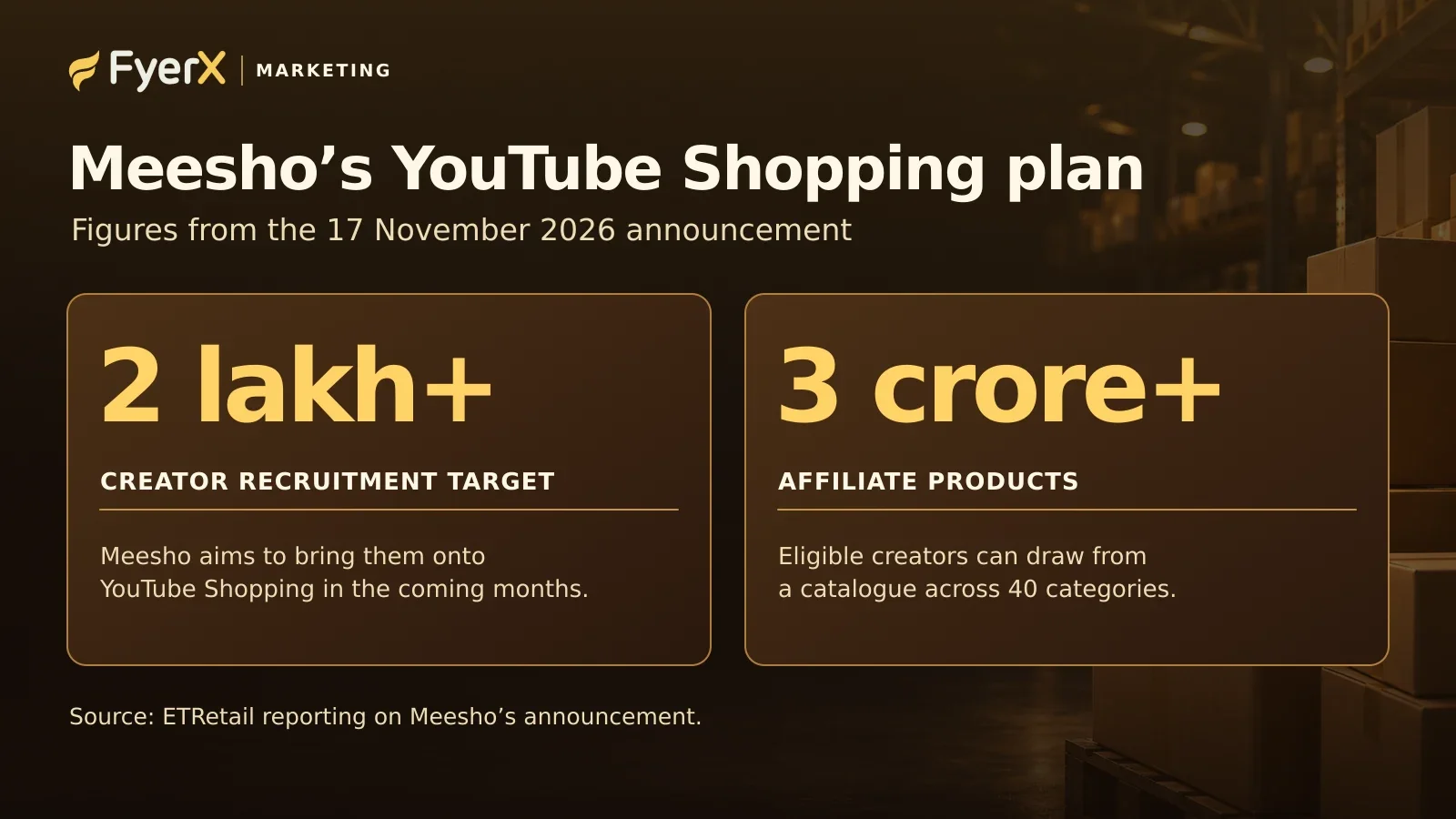
That’s the idea behind Meesho’s YouTube Shopping partnership, announced on 17 November 2026. Meesho wants to bring more than 2 lakh creators onto YouTube Shopping over the coming months. At the announcement, it said the partnership would give eligible creators access to more than 3 crore affiliate products across 40 categories. The creator figure is a recruitment target. The catalogue figure describes the selection creators can draw from.
The big question for a seller is what happens after someone watches. A Short can show your product in a way a normal listing can’t. A paid ad can help you reach a chosen audience on a set budget. Which one actually sells more, and what does each sale cost?
How a Meesho product goes from a YouTube Short to checkout
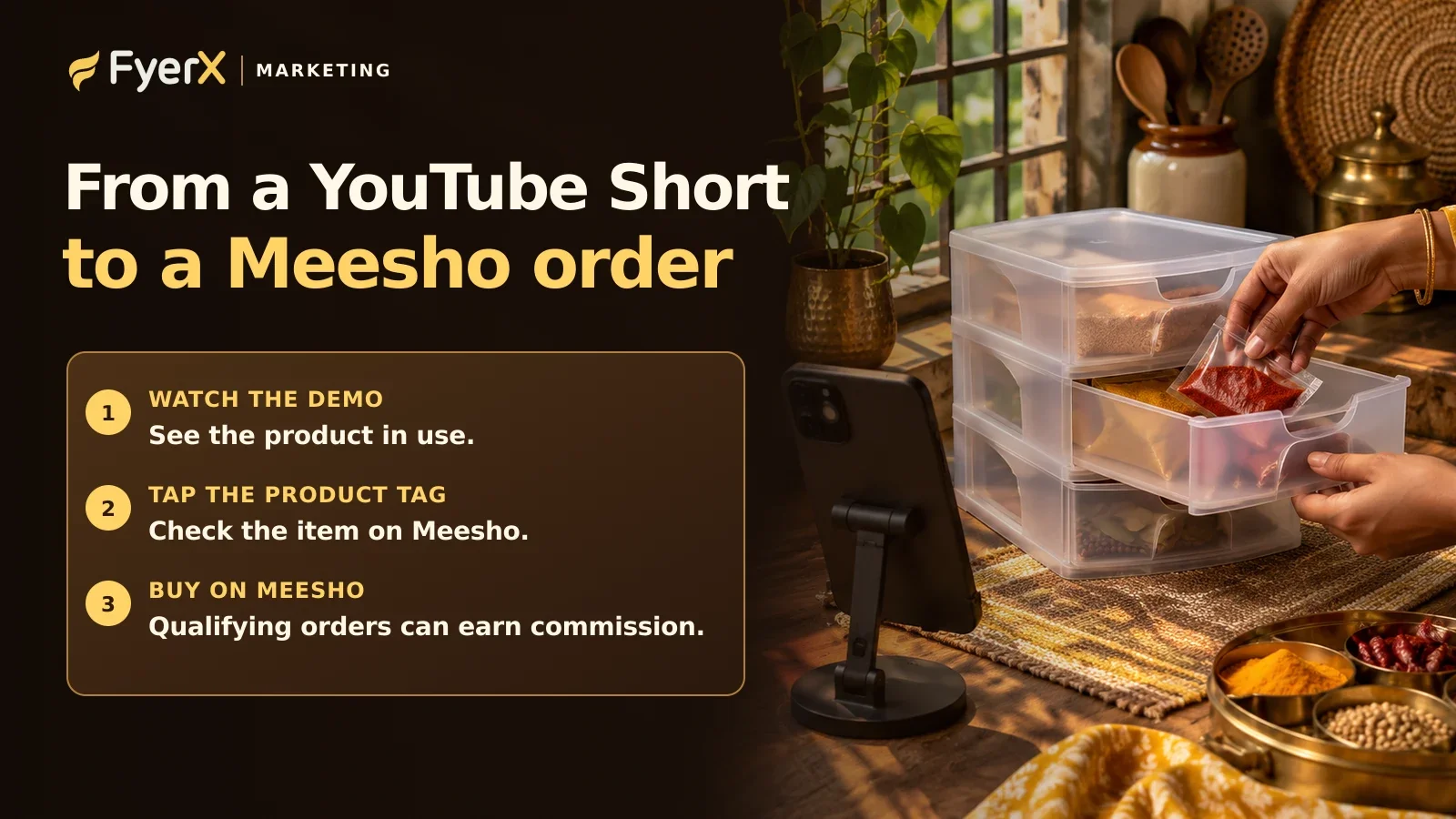
The partnership lets eligible creators tag Meesho products in Shorts, long-form videos and livestreams. A viewer who sees the tag can open the product listing and complete the purchase on Meesho. The creator can earn a commission on qualifying purchases attributed to their content. YouTube’s help centre says participating retailers and brands set product-specific commission rates and how long a purchase can count after a click. If a qualifying product is returned, YouTube says the commission is reversed.
That gives everyone a different reason to care. The viewer gets a demonstration and a way to find the item. The creator can earn from a recommendation. The seller gets a chance to reach someone who started out watching a video and might never have searched for the product.
The listing still has to finish the job. If the organiser in the video looks sturdy but the listing has confusing dimensions, the viewer may leave. If the tagged product is a different size from the one shown, some people may buy it and return it later. A good Short and an accurate product page need to tell the same story.
Why Meesho wants creators across India
According to ETRetail, Meesho said 81% of its Creator Club creators came from non-metro cities and about 90% of its active creators were nano creators at the time of the partnership announcement. Those figures describe Meesho’s existing creator network. They give some context for why the company sees room for smaller creators and regional-language content on YouTube.
Think about the difference between simply showing a storage product and showing it in a kitchen that looks like the viewer’s. A creator can demonstrate the fit, explain a detail in the language their audience uses and answer the questions that show up in the comments. A viewer who asks “Will this hold my one-litre oil bottle?” is telling the seller what matters in the purchase.
YouTube already had a base to build on. In its India update on Shopping, YouTube said more than 19 million videos had been tagged with affiliate products since the programme launched in India. That figure covers YouTube Shopping in India across partners. Meesho is adding its catalogue to a format that creators and viewers have already had time to learn.
Why a 30-second product demo can earn the click
A Short gets interesting when it answers a question before asking for the sale. For the drawer organiser, the first five seconds can show the clutter. The next fifteen can show what goes inside and how the organiser fits. The last ten can show the dimensions, point viewers to the tagged product and advise them to measure their own drawer first.
The creator also needs to make the commercial relationship clear. The Advertising Standards Council of India includes “Affiliate” among its permitted disclosure labels. In practice, give viewers an easy-to-see disclosure while they still have time to use that information.
A paid ad can use the same demonstration. What changes is how the audience finds it and how the seller buys distribution. A creator’s own post reaches people through the channel and YouTube’s recommendations. A paid campaign lets the advertiser choose a budget, test audiences and put more spend behind a video when it performs. YouTube has also introduced a way for eligible advertisers to promote affiliate creator content in paid campaigns. The same piece of creative can play both roles.
Can a YouTube Short really sell more than a paid ad?
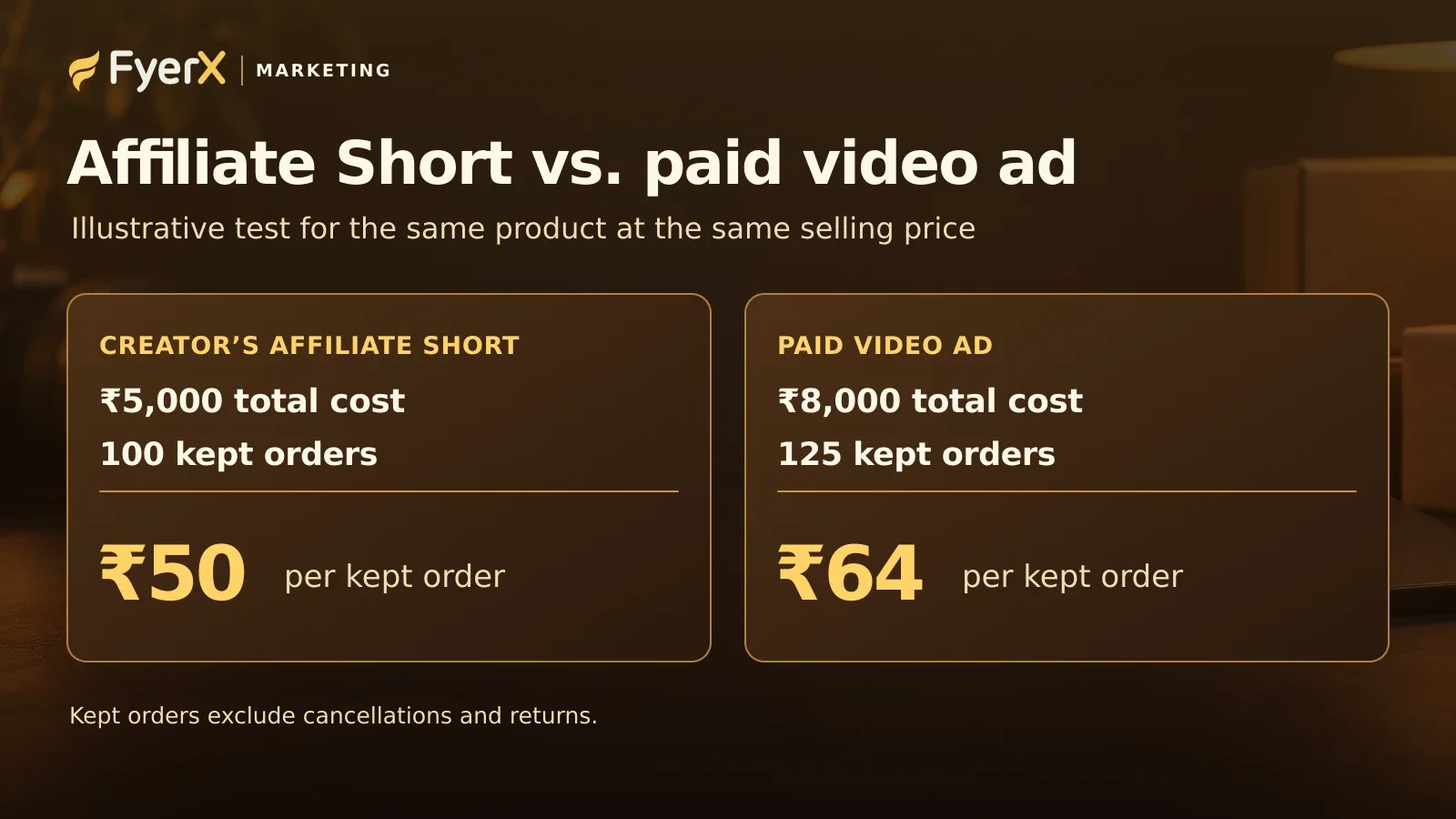
Take an illustrative test for the same kitchen organiser at the same selling price. Count orders that customers kept after the return period and include the costs of running each campaign.
CampaignCampaign costOrders customers keptCost per kept orderCreator’s affiliate Short₹5,000100₹50Paid video ad₹8,000125₹64
In the example, the Short costs ₹2,000 for samples and coordination, plus ₹30 in assumed commission for each of 100 qualifying orders. The paid ad costs ₹8,000 including media and its share of creative production. The paid ad delivers 25 more kept orders. The Short gets each kept order for ₹14 less. If you’re trying to move stock quickly, the extra volume may matter. If you have a tighter budget or less margin per order, the lower acquisition cost may matter more.
These figures are assumptions for the example. A seller should use its actual commission terms, creative costs and returns. It also needs to compare orders over similar periods and use the same measurement window where possible. A sale that appears in an affiliate report and a paid-ad report still represents one order. If the platform data is available, compare order records before adding the totals together. For a fair test of sales volume, give the campaigns comparable budgets where practical. If budget levels differ, read order volume alongside spend and what each order leaves after product, fulfilment and marketing costs.
How Indian brands can test creator commerce without chasing views
Start with one product that benefits from a demonstration. Pick creators whose audience already has the problem the product solves. Give them the exact product and enough time to use it. Ask them to answer the most common buying question in their own words and tag the item they actually showed.
Then look at the steps between watching and keeping the order. Plenty of views with few product taps may point to a weak reason to buy. Taps with few orders may lead you back to the price, availability or listing. Orders followed by returns may mean the product arrived differently from what the viewer expected. Each pattern gives you a different part of the campaign to improve.
Meesho’s target is about the size of the creator network it wants to build. For an individual brand, the first test is smaller. Can one creator show one product clearly enough that the right viewers buy it and keep it? Once you know the answer, you can decide whether to brief more creators, put paid spend behind the video or fix the product page first.
FyerX Marketing helps ecommerce brands plan creator campaigns around products people can see and understand in use. We can connect the creator brief, paid media and product page, then measure how much it costs to win orders that customers keep.
Planning to test creator-led sales? Talk to FyerX Marketing about the product, the audience and how you’ll measure the campaign.
Looking for marketing support?
Tell us what you want to achieve and where your team could use support.
Talk to FyerX Marketing